

For teams that sell and support the same customers.
Four example workflows for B2B teams of roughly 10 to 75 people: services firms, agencies, consultancies and IT services companies. Each one uses only what is in the product today.
No credit card
From a spreadsheet of clients to a pipeline the whole team trusts.
Client lists live in a spreadsheet and deals in someone's head. Proposals are rebuilt in a document every time.
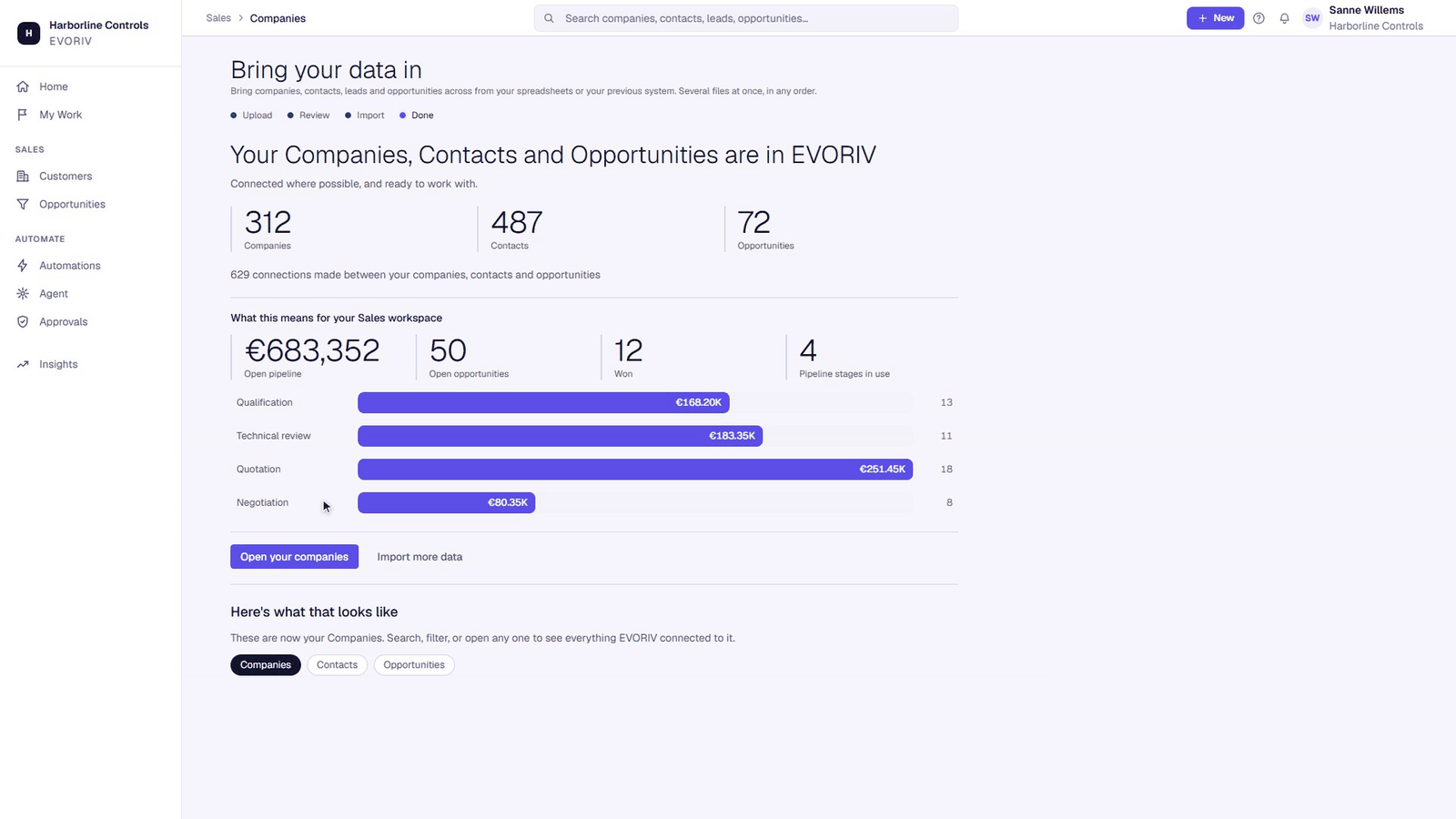
- Import
Upload the client spreadsheet. EVORIV links contacts to their companies and flags duplicates before anything is written.
- Deal
Each new request becomes an opportunity on the pipeline, with value and close date.
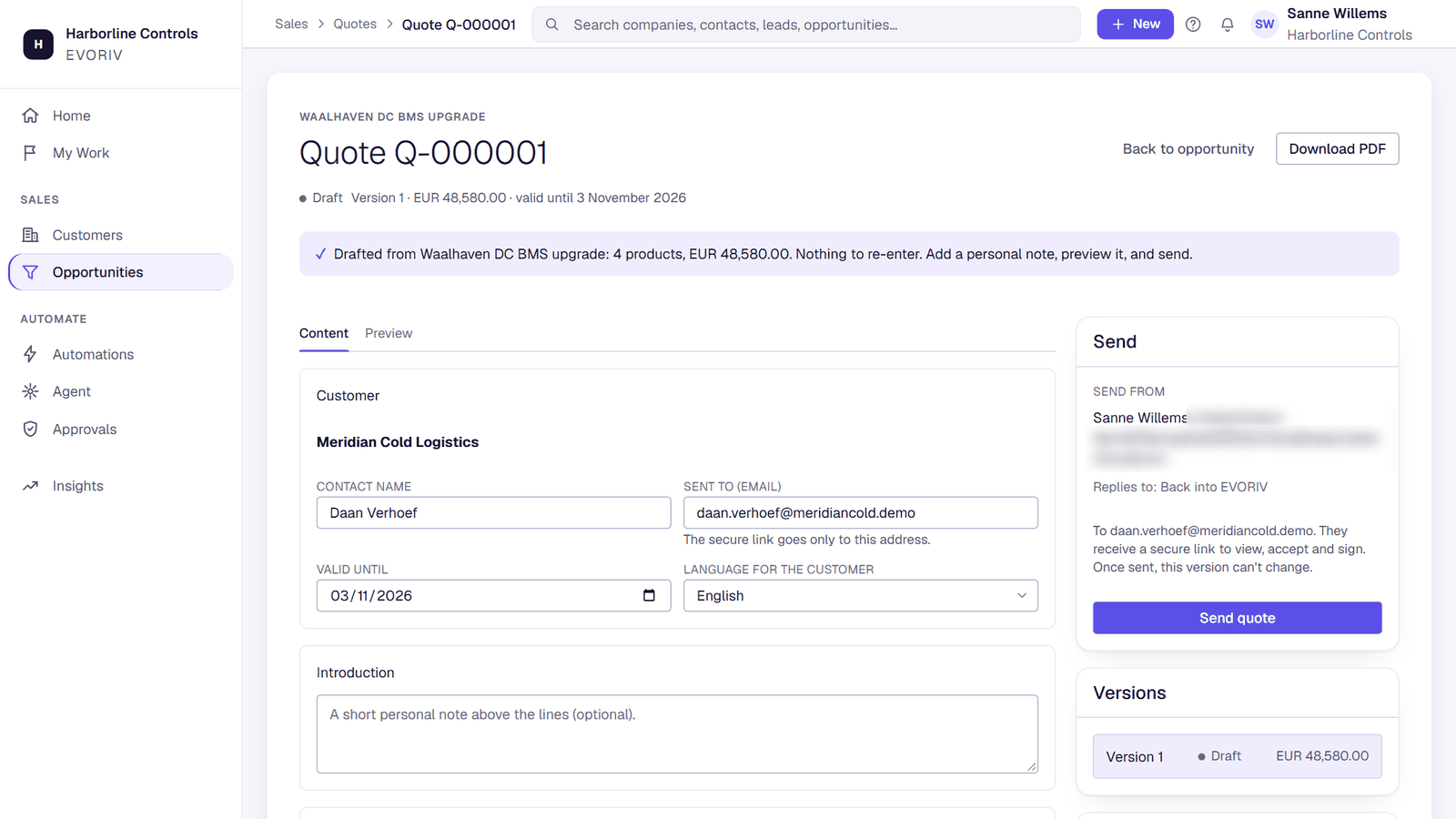
- Quote
Services from the price list go on the deal, and the quote is sent as a link the client signs online.
Quote the retainer from the deal, then keep the follow-up on rails.
New business moves fast, and follow-ups after a pitch slip when the team is busy delivering.
- Deal
The pitch is an opportunity with its contacts and every email on one timeline.
- Quote
The retainer and project fees become a quote created from the deal.
- Automation
A follow-up after the quote is sent runs on its own, read as a plain plan before it is switched on.
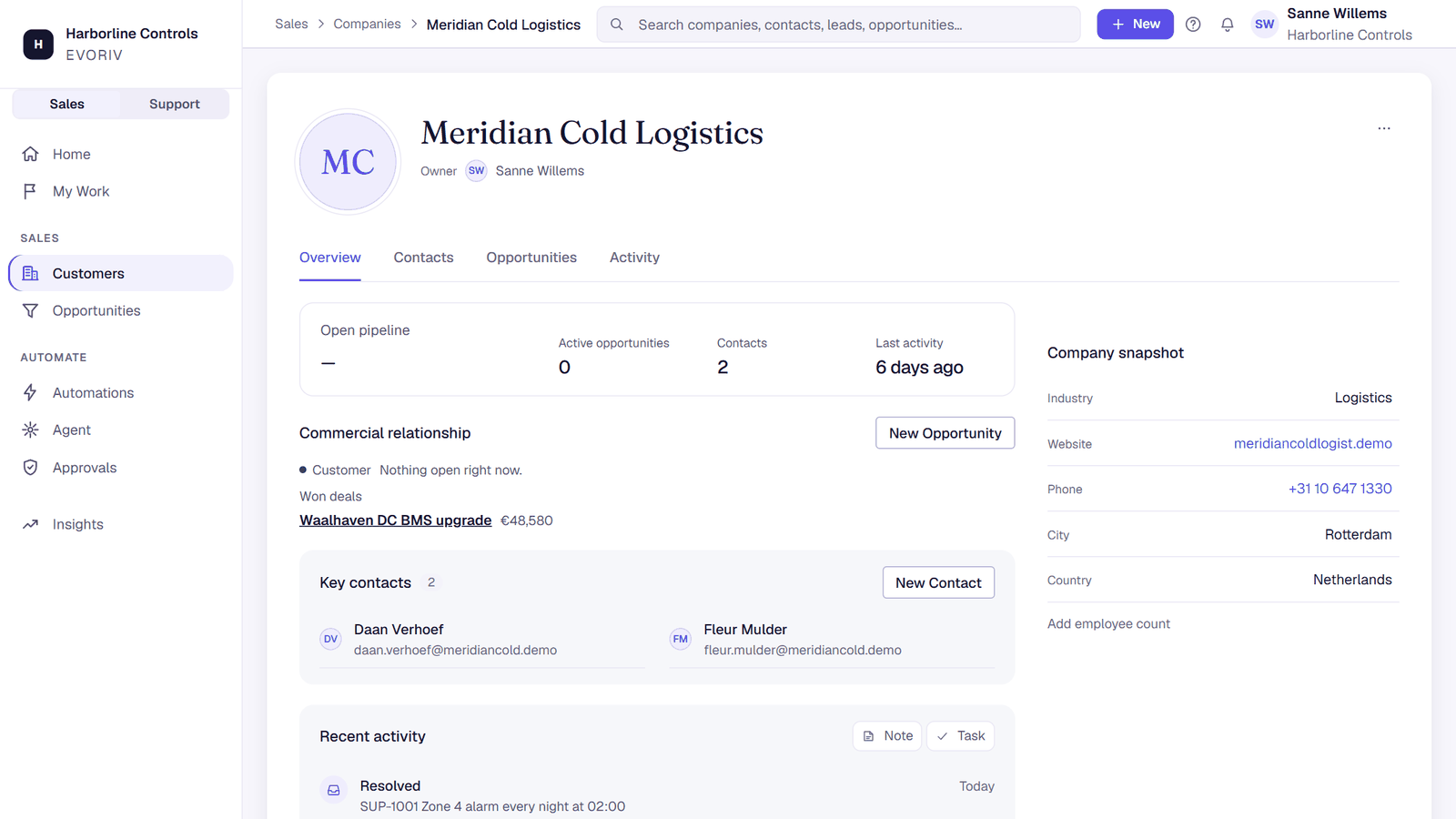
One record of the client, from first call to feedback.
Partners keep their own notes, and nobody sees the full relationship when a client calls.
- Customer
Calls, meetings, notes and emails sit on the company and contact, visible to everyone with access.
- Deal
Engagements move through the pipeline to won or lost, and the history stays either way.
- FeedbackRolling out
After delivery, a short survey goes out and the answer shows on the client as a Customer Signal.
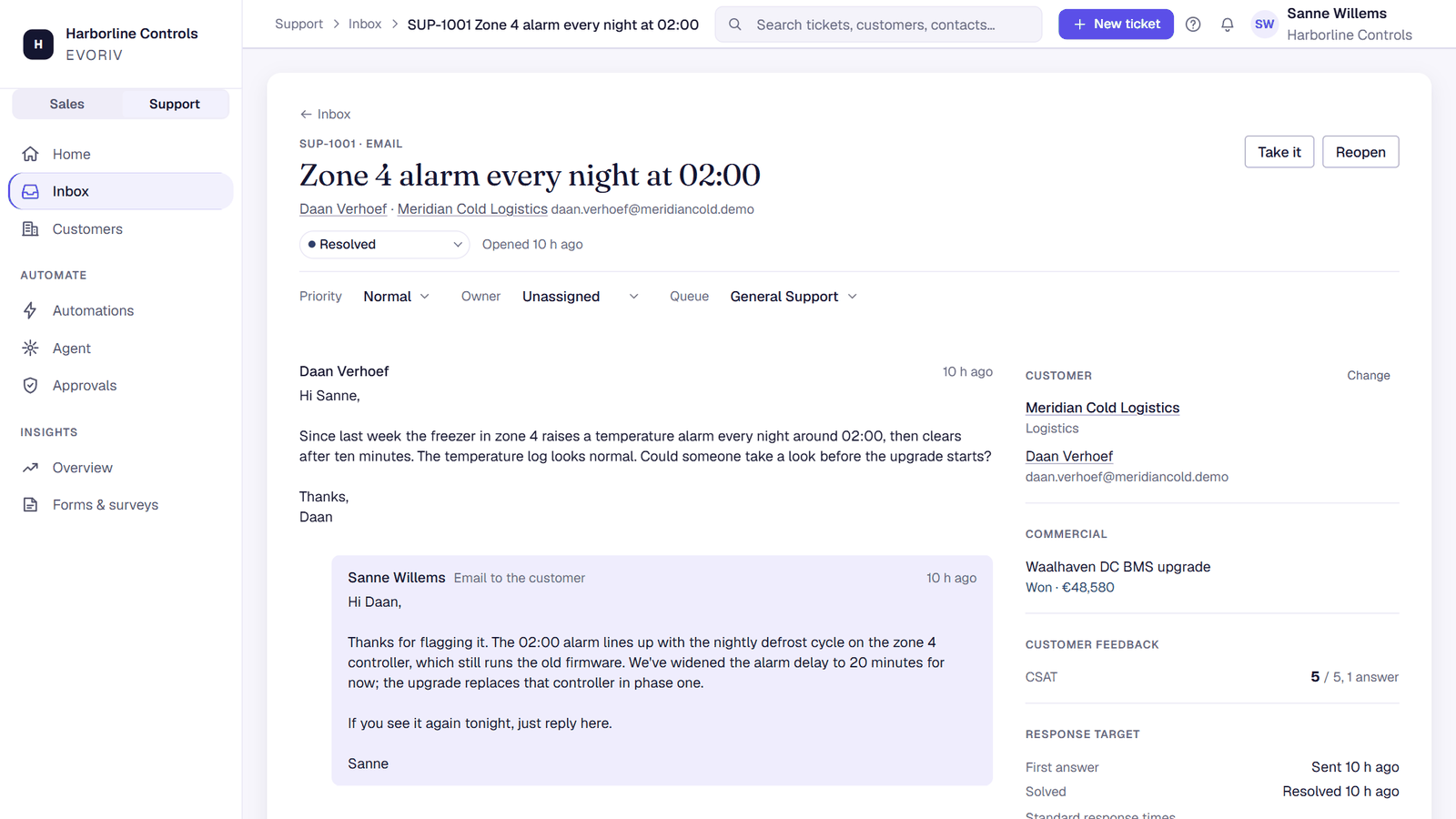
Sell the contract and support the customer on the same record.
Sales closes the contract in one tool, support tickets arrive in another, and neither sees the other.
- Switch
Export from the current CRM as CSV and import companies, contacts and open deals.
- Quote
The contract is quoted from the deal and accepted online.
- SupportRolling out
Customer emails become tickets next to the company, contacts and deals, so the engineer sees what was sold.
Try it with your own customers.
Import a sample of your data and walk one deal through it.